Leiden, city of the crossed keys

It's a student city, then and today; you can feel the energy that students lend to the place as you walk to your accomodation from Leiden Centraal Station; at the early dusk in the streetside bars, during daylight on market days. And of course, the light of the canals reflects the lighting of Christmas.
The story of how Leiden came to host students begins with a siege. In 1574, the city-state was surrounded by the Spanish troops of King Phillip II and starving. The mayor had two aces up his sleeve. The first was the dike and the wall around the city centre. The second was the very low-lying land about, subject to flooding from the river Rijn and its tributaries to the North Sea. The mayor promised (or so says the legend) that the starving residents, if they stayed loyal, they could eat his arm if it came to it. It didn't. William of Orange and his 'sea beggars' broke the siege by flooding out the Spanish, liberated the city, and handed out herring and white bread to the starving inhabitants. As a reward for loyalty and bravery, William offered to establish a university - inaugurated on 8 February (coincidentally, the date of my birthday). Today, Leiden University still carries that prestige, the Oxford or Harvard of the Netherlands. Luminaries like Descartes, Spinoza, Huygens and Einstein all studied or researched here (and the young Rembrandt learned to paint). Neither of my parents attended; but a couple of my cousins later did.
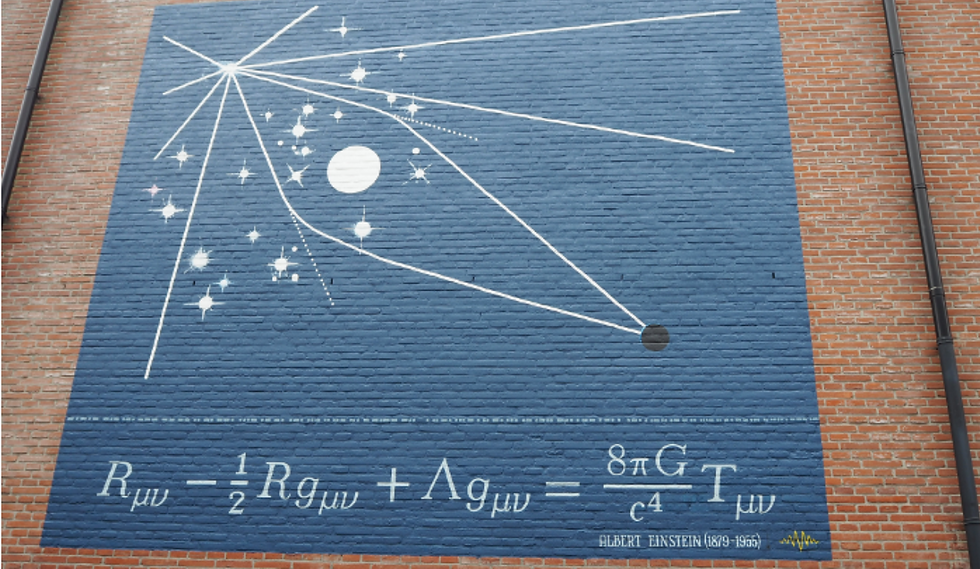
It's a pleasure just to wander in the evening light and randomly encounter wall poems and scientific formulae. The city has over 100 murals with the words of such famous poets as Rainer Maria Rilke; William Bugle Yeats; Pablo Neruda; and William Shakespeare. And, of course, it's science that makes the city famous these days. Einstein's theory of light, Huygen's Pendulum equation, and other Nobel prize-winning formulae may be too challenging for me, but I can still appreciate their beauty and simplicity as I unexpectedly meet them in Leiden's public spaces.
Scientific enquiry forces you to challenge the everyday thinking of your culture. In Leiden, the academics challenging church orthodoxy found publishers willing to stretch official tolerance. This is the city where the famous academic publisher Elsevier took a punt on manuscripts from that Italian renegade, Galileo, then under house arrest.
I take the family to a cafe at the entrance to the famous Pieterskerk (choose the excellent apple pie with your coffee). Who has the keys to the gates of Heaven? Saint Peter, of course. He's the patron saint of the city and the keeper of the crossed keys. A group of English protestants once sought shelter here, and—according to the plaque outside—eventually sailed across the Atlantic on a ship called the Mayflower in 1620, and into American history. In case the rewriting of history just happens to insert a current president into the orthodoxy, just remember that critical thinking was here!
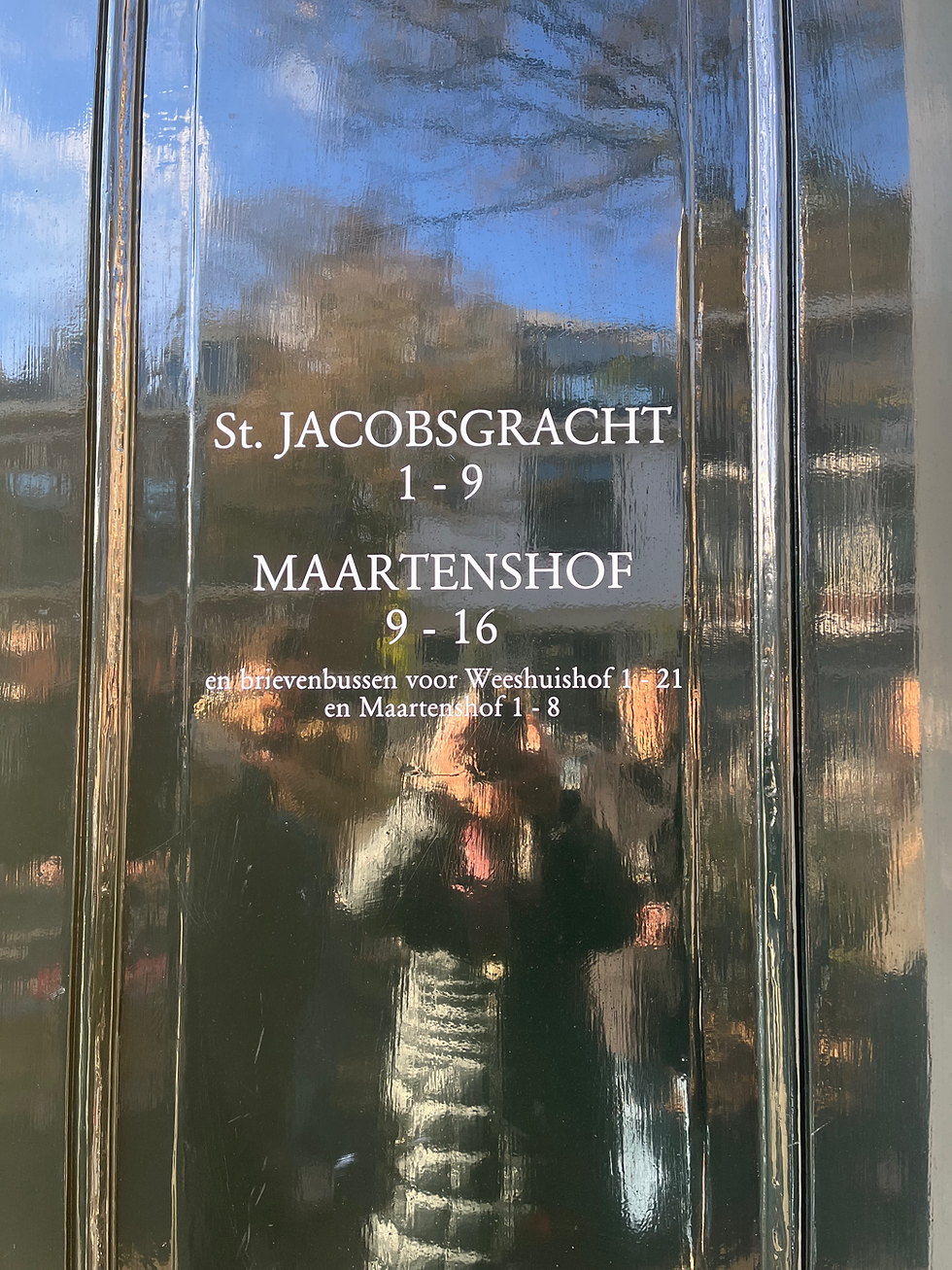
In 2023, when I visited the city as part of the research for my book (Crossed Keys and Coffee Spoons), we visited the Young Rembrandt Studio (Langebrug 89, €2.50). It's a five-star history lesson about one of the most talented, and celebrated, painters of all time. This second time, on a cold December day in 2025, my cousin had arranged a walking tour from the Burcht, the central high point where the city was defended (a worthwhile climb, if just for the view), via the orphanage where once my grandfather had grown up (Sint Jacobsgracht 1-9 and Maartenshof 9-16, now private apartments not open to the public) and return via the house and hofje of Jan Steen, an artist and contemporary of Rembrandt.
Later, we walk past the Morspoort, a remnant gate on the old city wall, recognisable from my mother's embroidery at Ons Dorp in Henderson. There's another embroidery of the Koornbrug on the Nieuwe Rijn canal (under renovation, so hidden under safety fencing and security tarpaulins), where we happen upon the market. Edam and Gouda and crusty bread in our shopping panier for tomorrow, we head canal-side for a local beer. And why not? This is a city that rewards leisurely looking. The city of the crossed keys is an ideal place to experience both the serious side and the playful side of the Netherlands.


Comments